Skip to content
Telescopes.pk

Moon

The Moon

Earth's only natural satellite and the best first target for any telescope: bright, large and full of detail.

When to look: Any clear evening except the few nights around new Moon.

What it looks like

Described as seen by eye at the eyepiece, on a clear night. Photographs collect light for minutes or hours and show far more colour and detail.

With the naked eye
Its phases, the dark plains known as 'seas', and the brightest ray craters, such as Tycho, around full Moon.
Small telescope (60-90 mm)
Hundreds of craters, mountain ranges and valleys, most striking along the terminator - the line between lunar day and night, where shadows are longest.
Medium telescope (114-150 mm)
Terraced crater walls, central peaks, winding rilles and small craterlets a few kilometres across when the air is steady.
Large telescope (200 mm and up)
Very fine detail, limited mostly by the steadiness of the air rather than by the telescope. High magnification becomes usable on good nights.

City or dark sky

From a city

Light pollution makes no difference. The Moon can be observed just as well from a city rooftop.

From a dark site

No advantage over the city for the Moon itself.

Observing tip: Observe near first or last quarter rather than full Moon: light from the side shows the relief. A neutral density ('Moon') filter makes a bright Moon more comfortable to look at.

The Moon through our telescopes

Photographs are brighter and sharper than the view at the eyepiece; each is labelled with how it was taken.
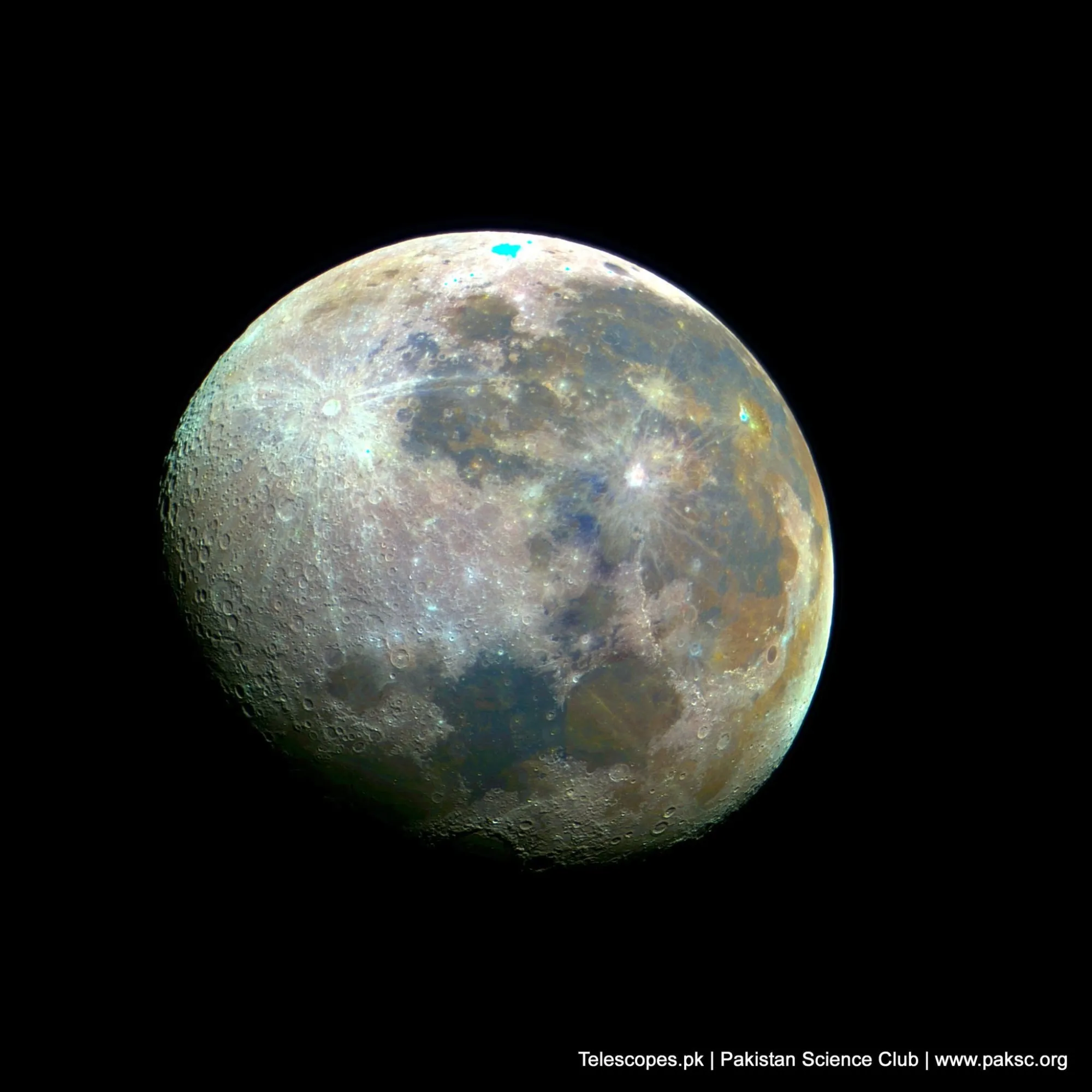
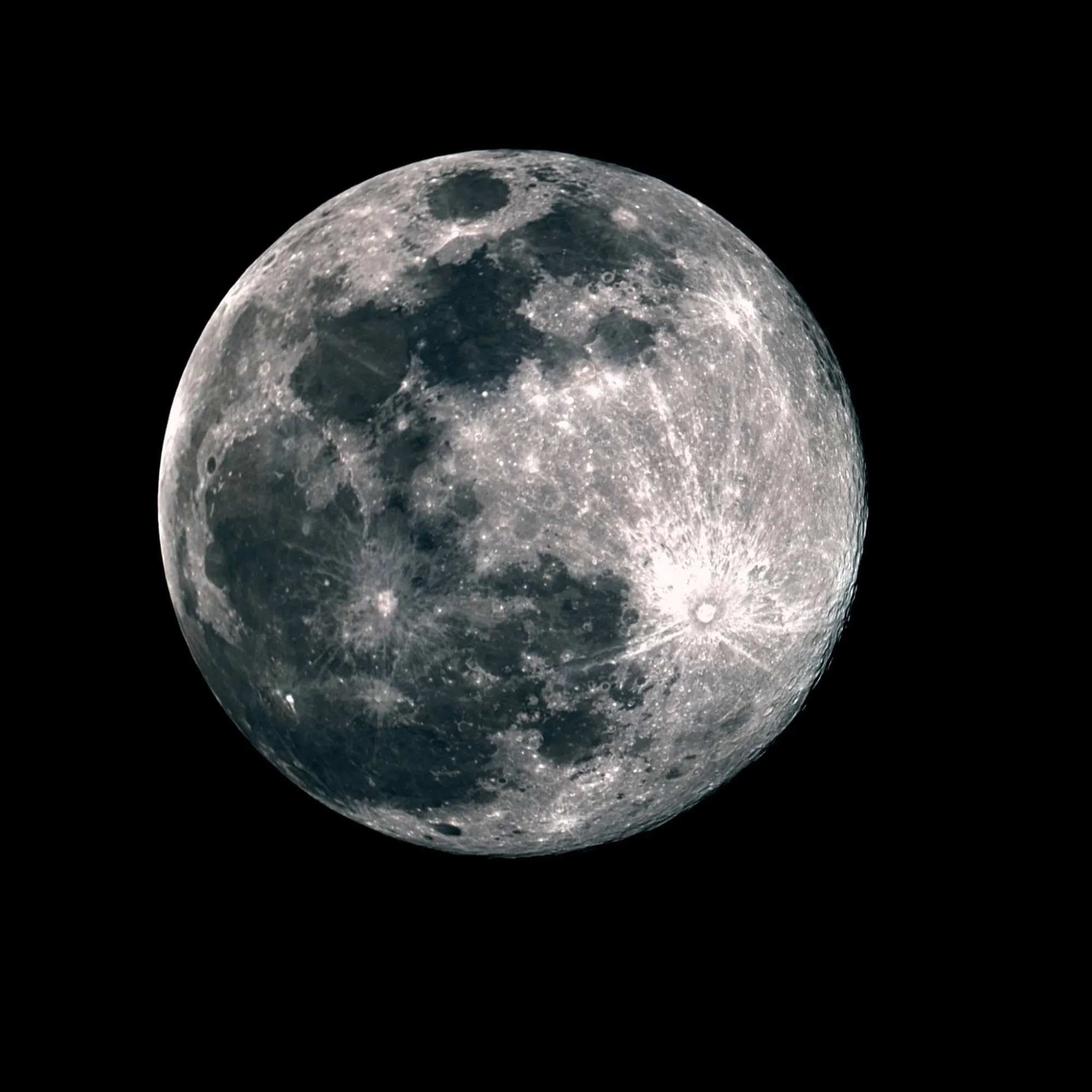
A colour-enhanced photograph of the Moon, its surface tinted to show differences in the lunar soil.
Through the RV6-750 · Edited
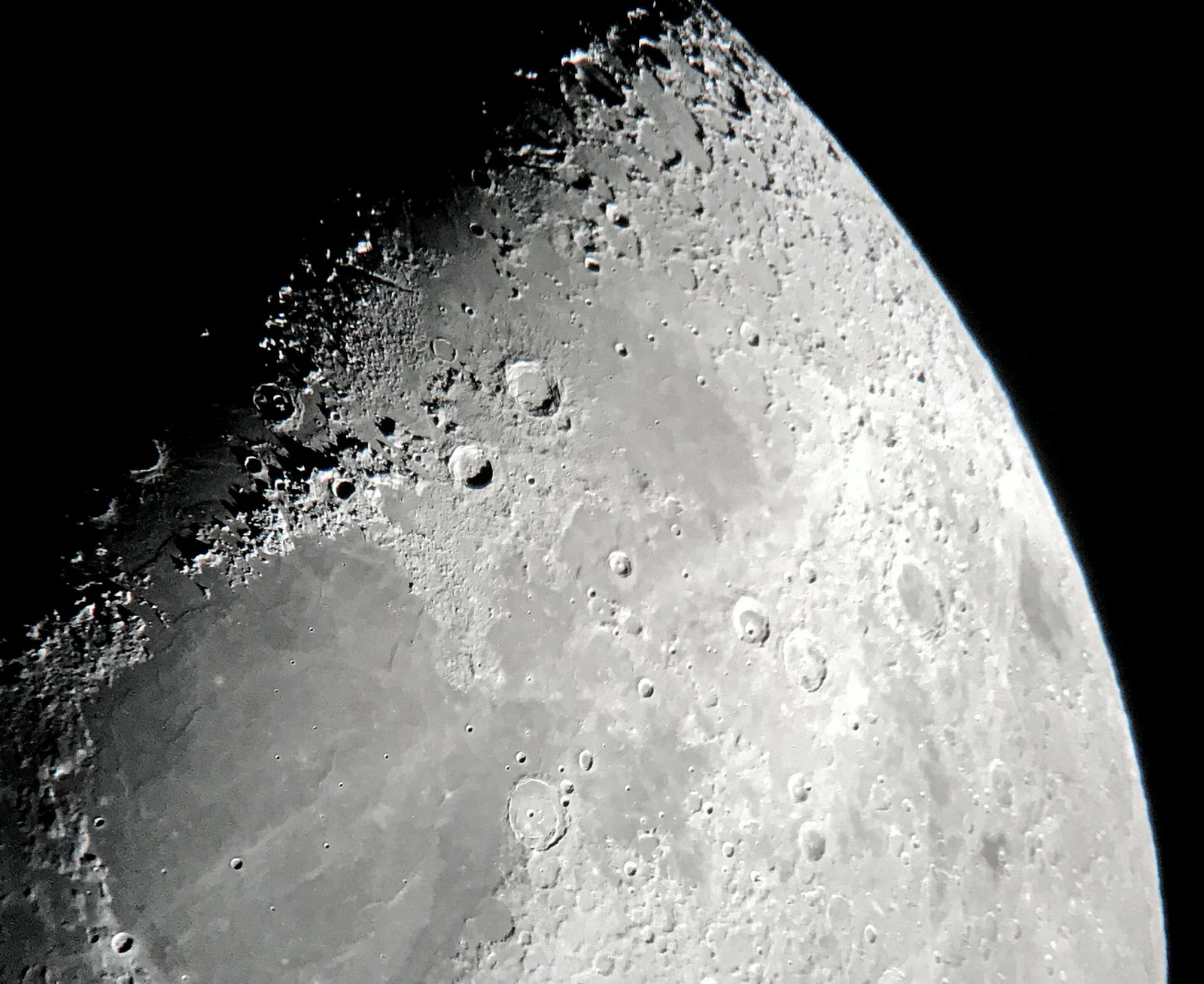
Close-up of lunar craters near the terminator, photographed through the RV6-750.
Through the RV6-750
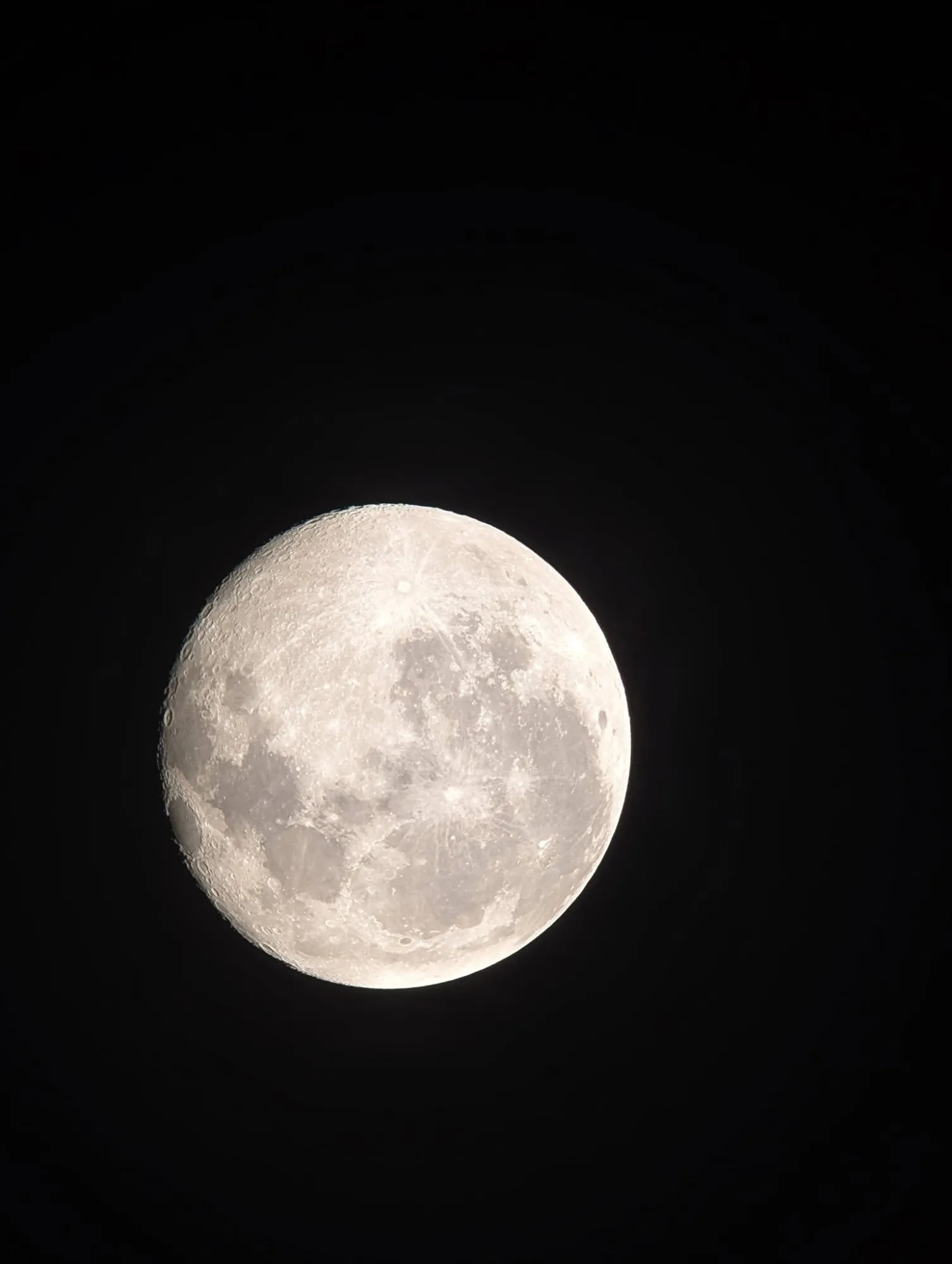
The full Moon, bright and white against a black sky.
Through the RV6-750
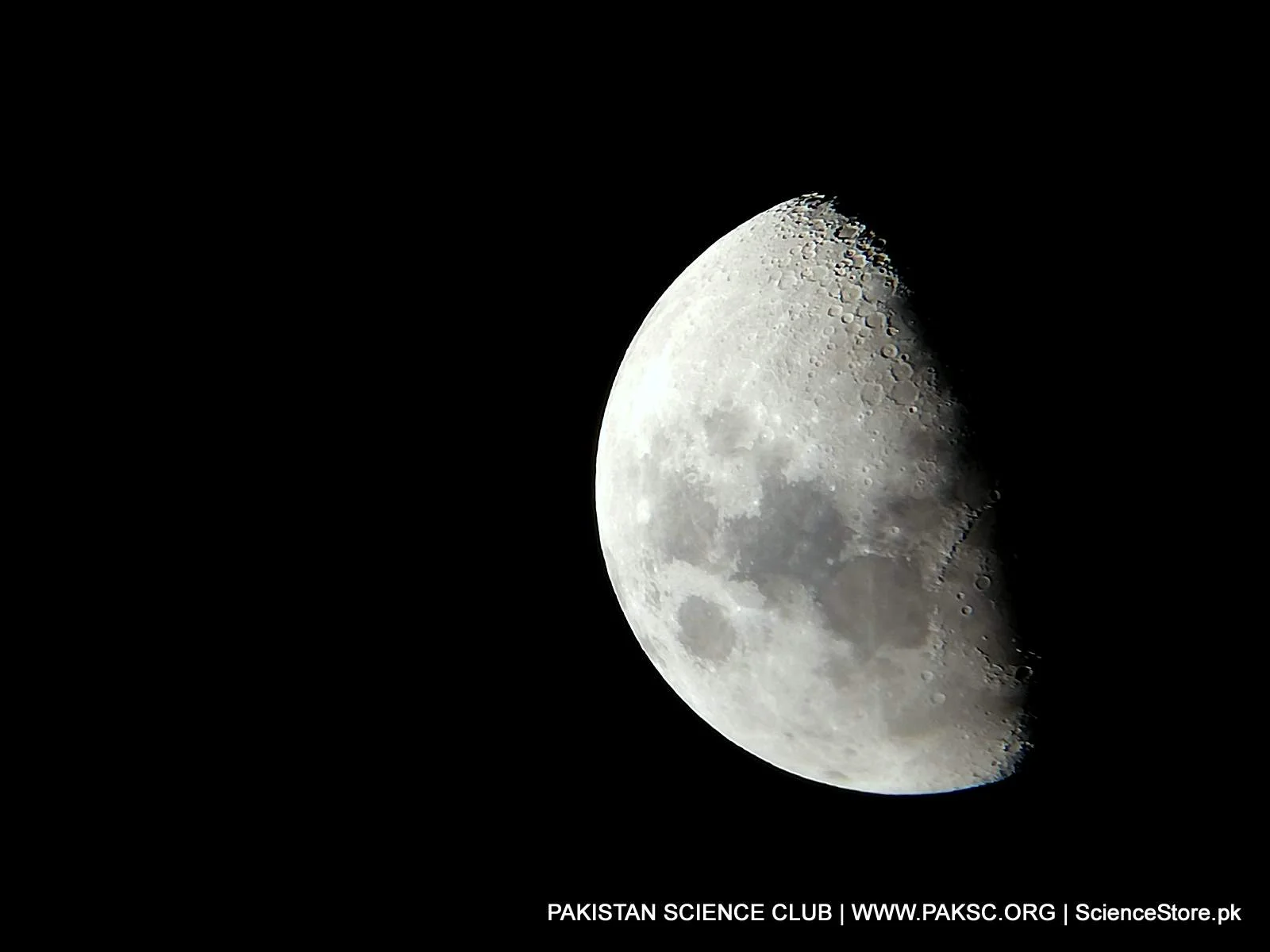
The Moon near first quarter through the RV6-750, craters sharp along the line between day and night.
Through the RV6-750
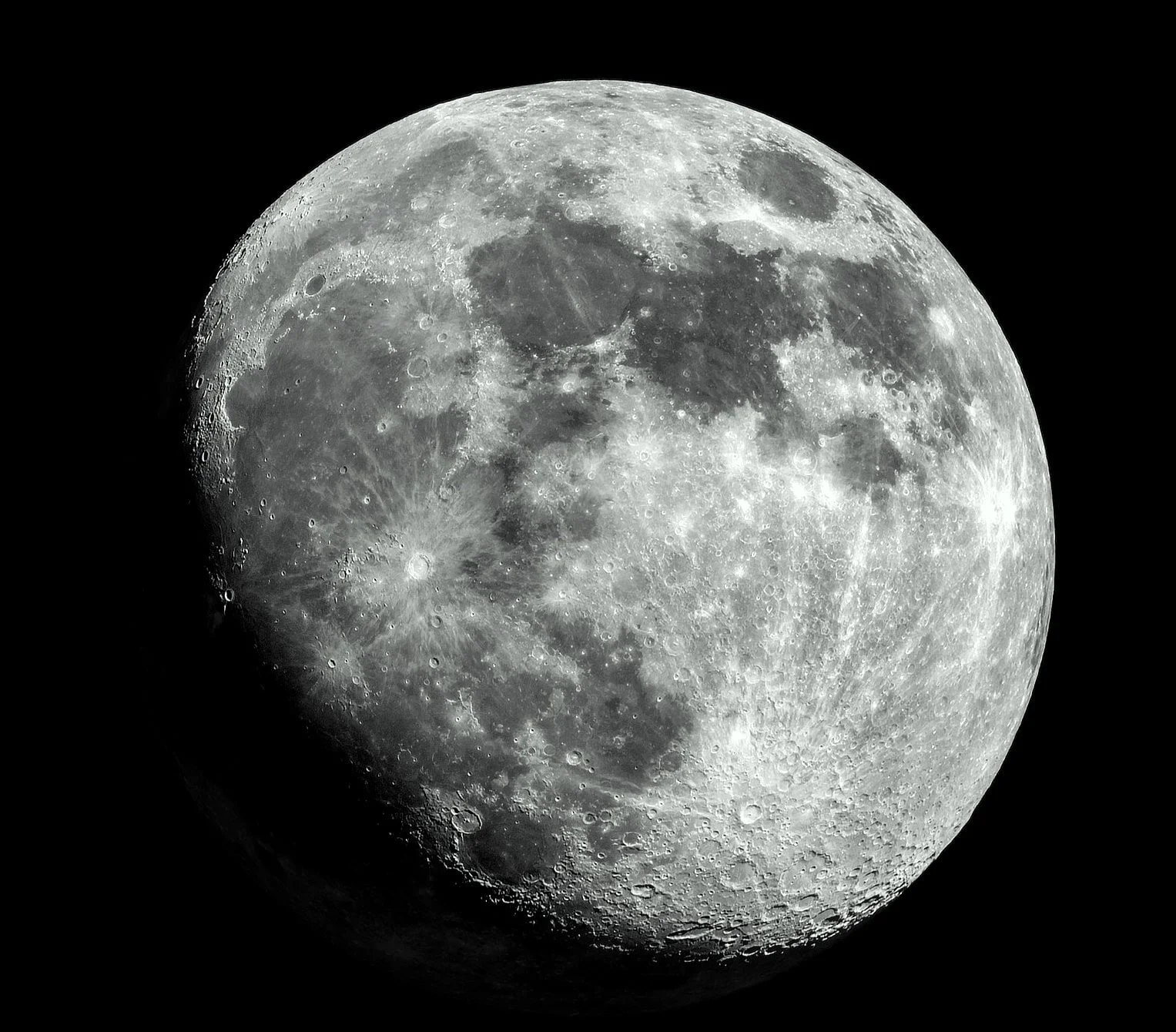
A waxing gibbous Moon through the RV6-750, with the dark maria and bright craters visible.
Through the RV6-750
A detailed photograph of the full Moon with its bright ray craters.
Through the RV6-750
Join the Astronomy Club (opens paksc.org)